Apple’s iPhone 17 series has arrived with unusual momentum. With millions of pre-orders and delivery queues stretching weeks ahead, expectations for the camera system are understandably high. This review looks at the iPhone 17, iPhone 17 Pro, and iPhone 17 Pro Max from a practical, everyday perspective—focusing less on lab charts and more on how these cameras actually behave in daily shooting.
Rather than chasing specs alone, this review asks a simpler question: How usable, consistent, and reliable are the cameras when you just pull the phone out and shoot?
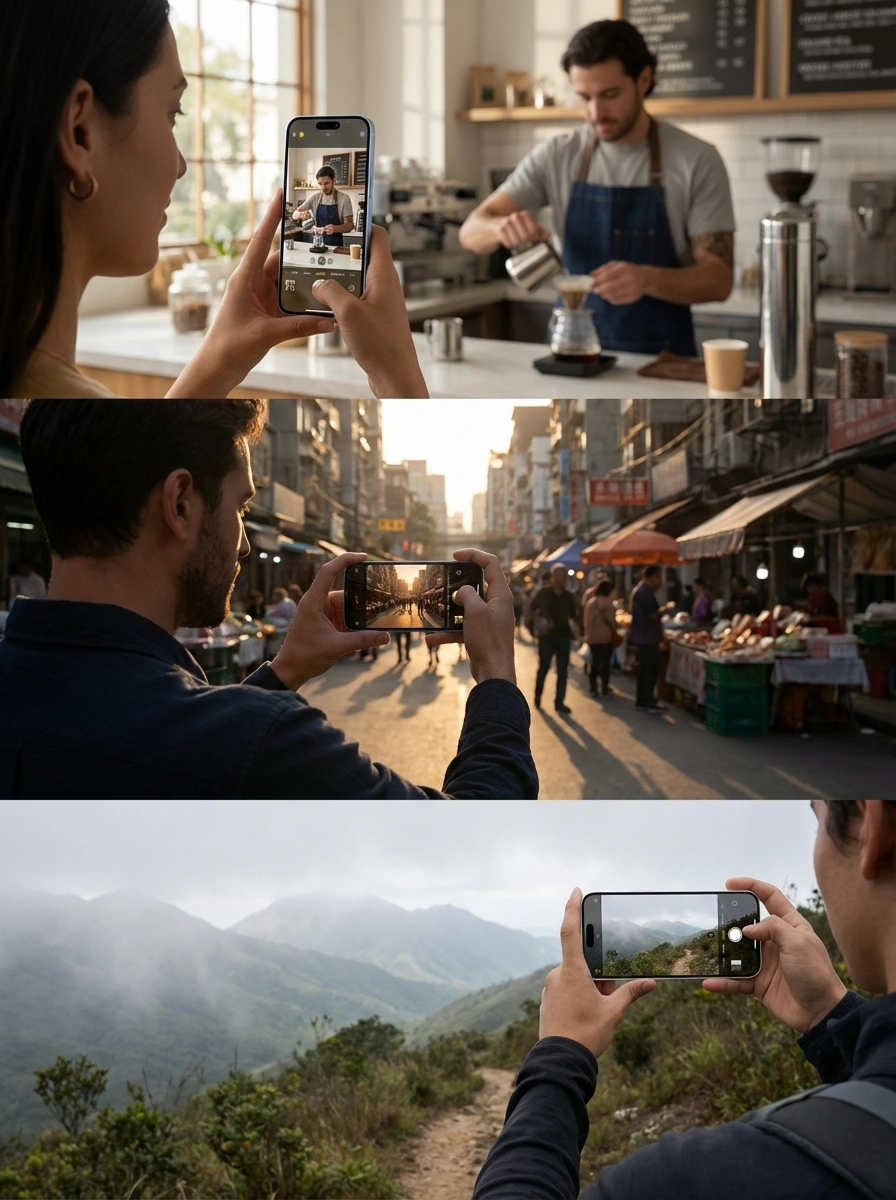
A Generational Shift in the Standard Model
The biggest surprise this year may not come from the Pro models at all.
For the first time, the standard iPhone 17 receives features that were once firmly reserved for higher tiers: a 120 Hz display, 256 GB base storage, and the same new 18-megapixel front camera shared across the entire lineup. In practical terms, this makes the jump from the previous generation feel larger than many past upgrades—arguably even more noticeable than several multi-year gaps before it.
Whether driven by market pressure or a strategic push, the result is clear: the standard model no longer feels like a compromise.
Front Camera: A Long-Awaited Upgrade
Apple’s front camera had gone unchanged for years, and the new 18 MP selfie camera finally brings a visible refresh.
In daily use, the most notable improvement is not resolution alone, but processing restraint. Sharpening is noticeably toned down, producing more natural skin texture and a less “over-processed” look. Under normal lighting, all three models deliver consistent, pleasing results, though subtle differences in colour temperature can still appear between models.

A new portrait-to-landscape framing switch on the front camera is smooth and intuitive, especially useful for group selfies and social content. While occasional software hiccups were observed during early testing, the feature itself feels well integrated.
Low-light selfies also benefit from improved night processing, offering usable results both with and without night mode enabled.
Rear Cameras: Consistency First, Specialisation Second
Main Camera
Across all three models, the main camera delivers what Apple does best: stable exposure, reliable white balance, and realistic colour reproduction. In everyday shooting—street scenes, indoor lighting, mixed light environments—the standard model keeps pace with the Pro variants more often than expected.
Differences only become apparent in extreme low-light scenarios, where the Pro and Pro Max begin to pull ahead in noise control and highlight retention.
Ultra-Wide Camera
The ultra-wide lens on the standard iPhone 17 stands out as one of the quiet winners of this generation. Edge distortion is well controlled, detail holds up when zoomed in, and overall image quality is remarkably close to that of the Pro models. For landscapes, architecture, and casual wide shots, the gap is minimal.
Telephoto: Still Apple’s Weak Spot
The updated telephoto lens on the Pro and Pro Max supports up to 8× hybrid zoom, but performance varies sharply with lighting.
- In good light: results are usable, even impressive at moderate zoom levels.
- In low light: noise increases rapidly, and image quality degrades noticeably.
- At night: high-magnification shots often become unusable, with heavy noise and reduced detail.
Portrait mode benefits from natural background separation, but compared with competitors that emphasise night telephoto and macro versatility, Apple’s telephoto still feels conservative.
Video: Apple Remains the Benchmark
If there is one area where Apple continues to dominate, it is video recording.
A newly added dual-camera recording mode allows simultaneous front and rear capture at up to 4K 30 fps—a feature long present on Android devices, but executed here with higher resolution and better consistency.
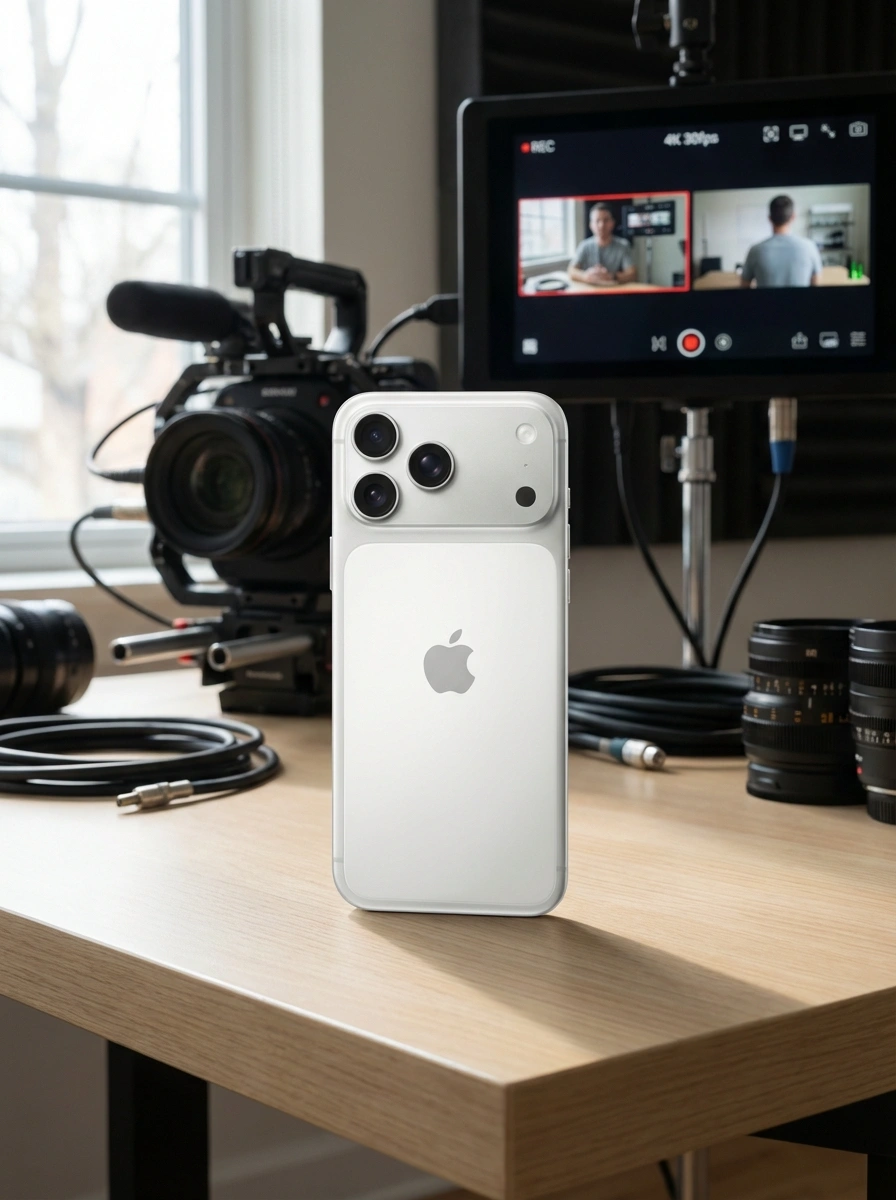
Stabilisation remains excellent:
- Motion mode reduces shake dramatically, even if resolution drops slightly.
- Daytime footage from all models looks clean and controlled.
- Telephoto video remains usable at higher zoom levels during the day.
At night, however, the telephoto lens once again becomes the weak link, with visible noise and brightness drops during lens switching. Even so, overall video reliability remains industry-leading.
Weight, Handling, and Everyday Comfort
All three models now use aluminium frames, contributing to a noticeable reduction in weight. Even the largest Pro Max feels more manageable than previous generations, especially for prolonged handheld shooting.
This lighter design directly improves real-world usability—particularly for video recording, travel, and daily carry.
Final Thoughts
The iPhone 17 series marks a rare moment where no model feels like the “wrong” choice. Instead of one device dominating the lineup, each version serves a clear audience.
The biggest shift is philosophical: Apple has narrowed the gap between standard and Pro models, making everyday photography and video more accessible without forcing users into the highest tier.