Published on:
Huawei’s HarmonyOS Enters a New Phase as “HarmonyOS Next” Rebuilds the System From the Kernel Up
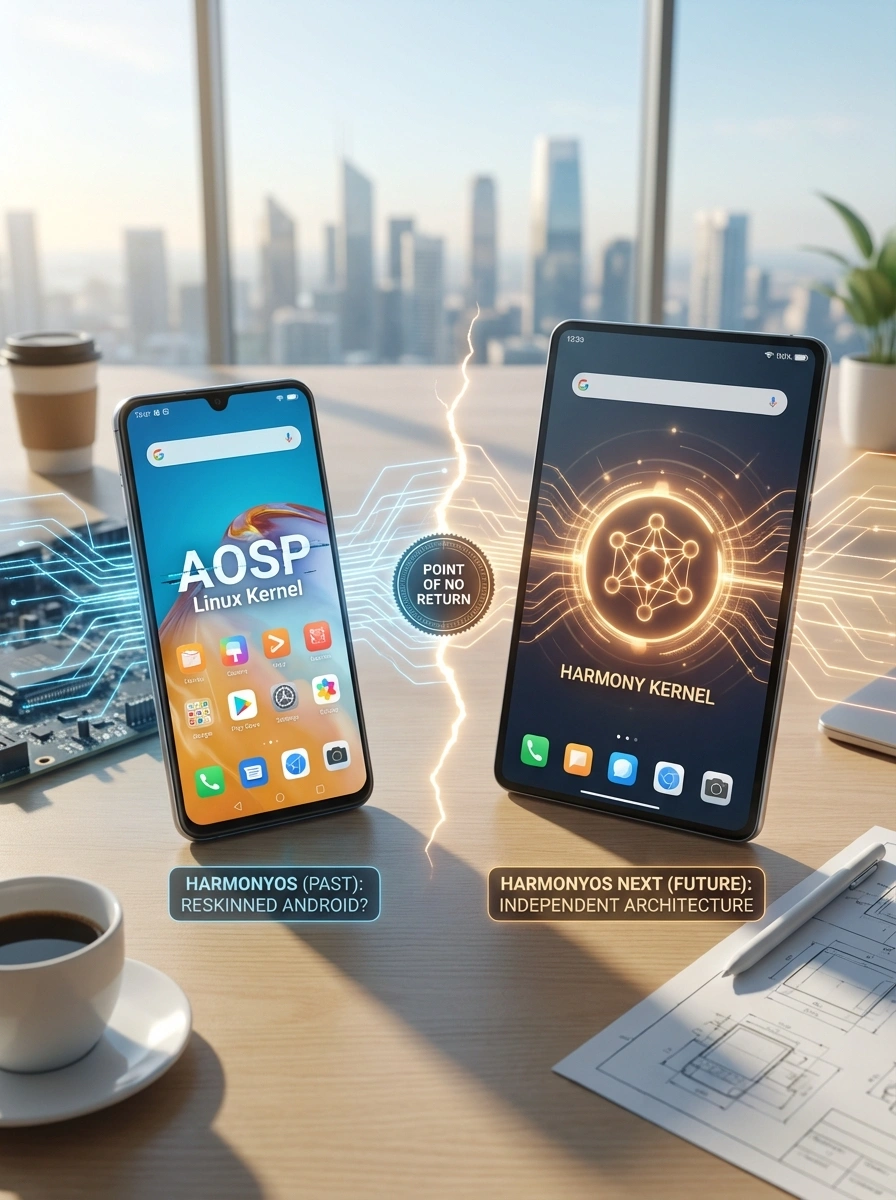
A new wave of discussion around Huawei’s HarmonyOS is resurfacing a long-running debate: is HarmonyOS simply a repackaged version of Android/Linux—or has it become a genuinely independent operating system?
The real inflection point arrives with HarmonyOS Next (often described as HarmonyOS 5), where Huawei’s platform is framed as crossing a technical “point of no return” by shifting to its own kernel. This move signals a fundamental transition from a "backup plan" to a strategic, independent platform.
The Core Dispute: “Reskinned Android” vs. Independent OS
The most meaningful dividing line is the kernel.
Critics previously argued that early versions of HarmonyOS relied heavily on Android’s open-source foundations. However, from HarmonyOS Next onward, Huawei is moving to a native HarmonyOS kernel. While UI layers can be debated, once the kernel changes, the operating system’s identity changes with it.
Why the Kernel Matters: The Microkernel Approach
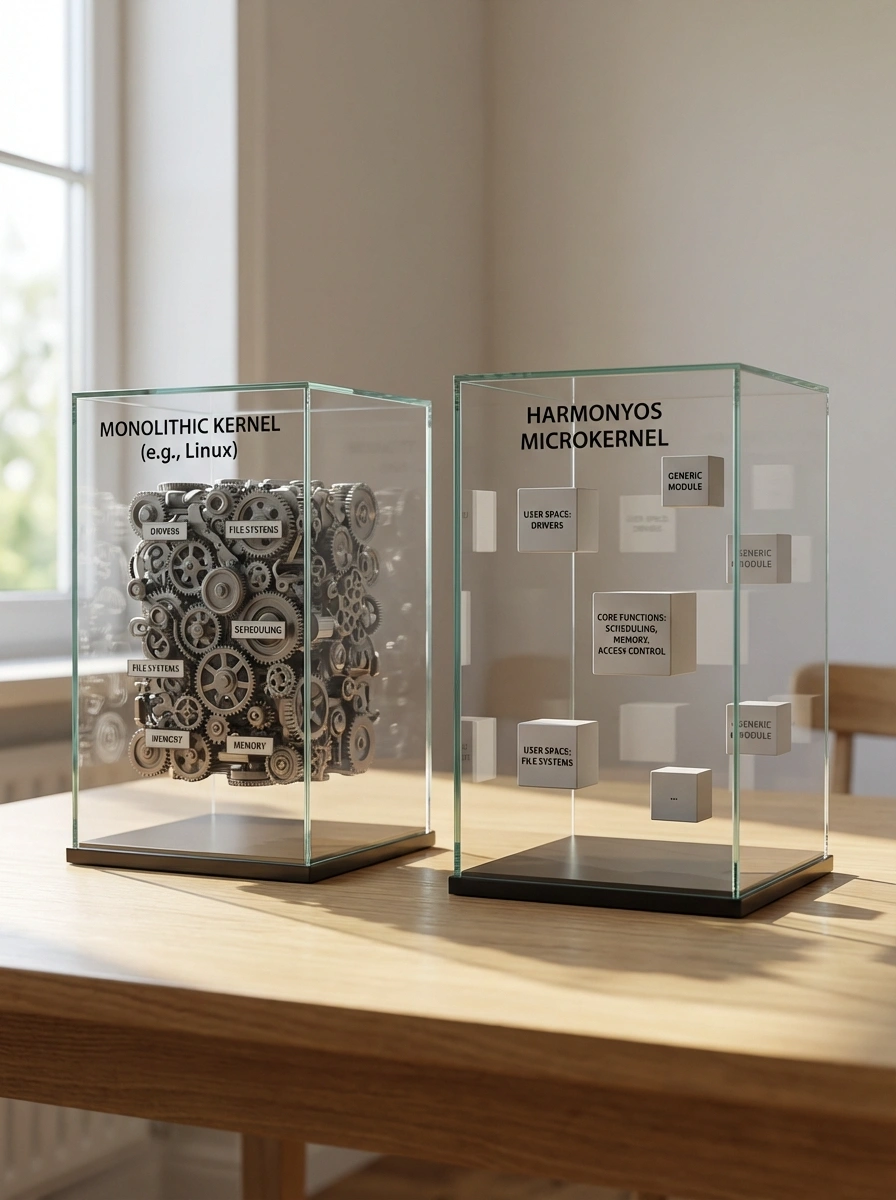
Unlike mainstream systems that use monolithic kernels (like Linux), HarmonyOS pursues a microkernel approach.
It keeps only a minimal set of core functions—scheduling, memory, and access control—in high-privilege kernel space. Modular components like drivers and file systems are moved into user space.
Strategic Goals:
- Scalability: A microkernel allows Huawei to “assemble” capabilities like building blocks, fitting everything from lightweight IoT devices to high-performance smartphones.
- Portability: The modular structure reduces the cost of adapting the OS to diverse hardware architectures.
The Trade-Off: Addressing the “IPC Tax”
Microkernels face a well-known challenge: inter-process communication (IPC) overhead. Moving services outside the kernel requires more frequent “handoffs” between processes.
Huawei addresses this by:
- Restructuring components to reduce the frequency of communication.
- Optimising mechanisms for faster context switching.
- Dynamic adjustment: In high-performance scenarios, modules can be brought closer together; in security-sensitive scenarios, separation is increased.
“Distributed Soft Bus”: The Signature Multi-Device Layer
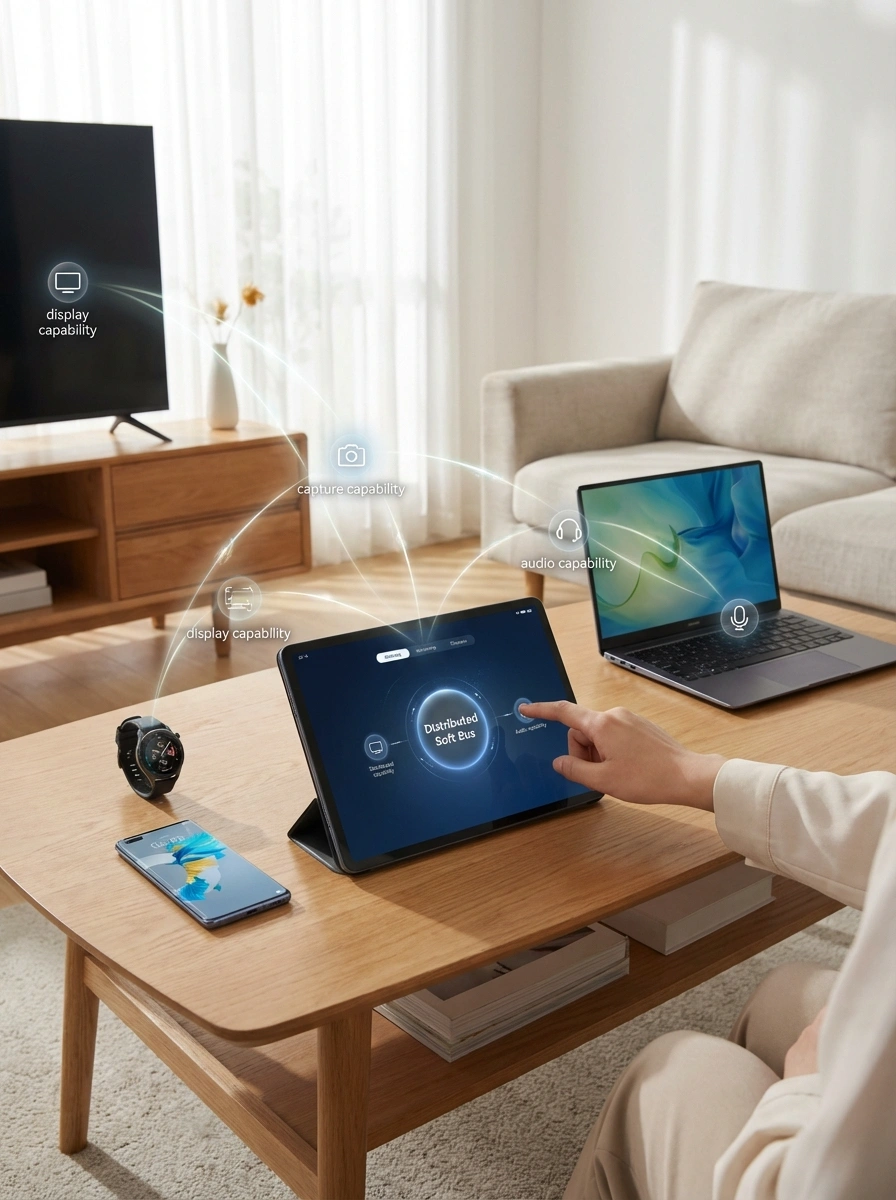
The most visible differentiator of HarmonyOS is its seamless multi-device collaboration. This is powered by the “distributed soft bus.”
Instead of treating hardware as physical devices, HarmonyOS abstracts them into capabilities (e.g., “capture capability,” “display capability”). Devices broadcast their availability, allowing those capabilities to be invoked across the network as if they were local.
Ecosystem Reality: The “Two-Sided Market” Problem
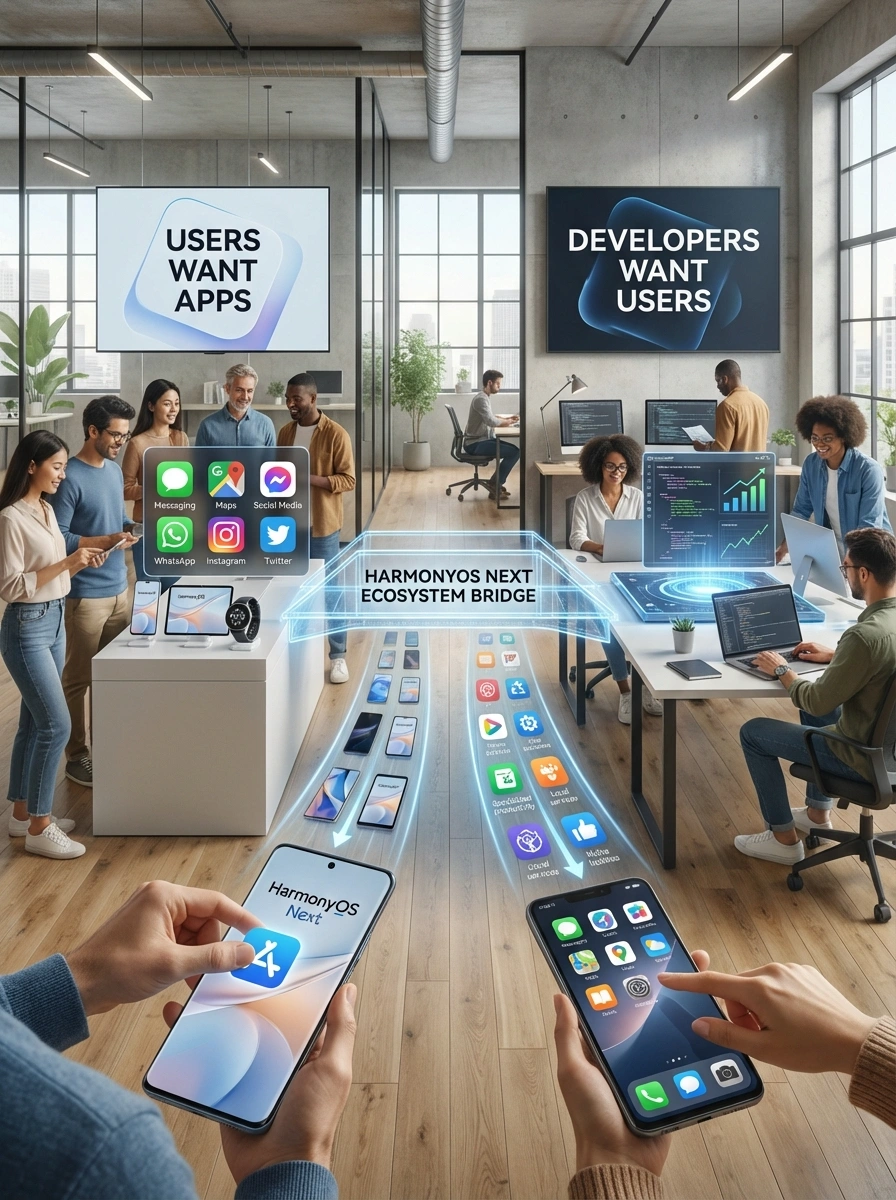
Technical ambition alone doesn't guarantee success. Huawei faces the classic ecosystem challenge: users want apps, and developers want users.
Huawei’s strategy focuses on:
- Ensuring a small number of “must-have” foundational apps are present.
- Rapidly pushing HarmonyOS Next through popular device lines to build momentum.
- Attracting independent developers with opportunities in underserved app categories.
A Strategy for the Future
HarmonyOS is more than an engineering project; it is a strategic wager on the future of computing. Whether the next era is defined by multi-device collaboration, spatial computing, or AI-first interfaces, Huawei has built a system that is clearly distinct from its foundations.
The future of the platform will be defined by architecture, user experience, and ecosystem execution rather than political slogans.