Published on:
Chang’e-6 and the Lunar Far Side: Why This Mission Still Feels “Next Level”
Chang’e-6’s attempt to land on the Moon’s far side, collect samples, and return them to Earth has become one of the most closely watched space missions in recent years. Some people ask a fair question: “If India already achieved a lunar soft landing, is China doing it again still impressive?”
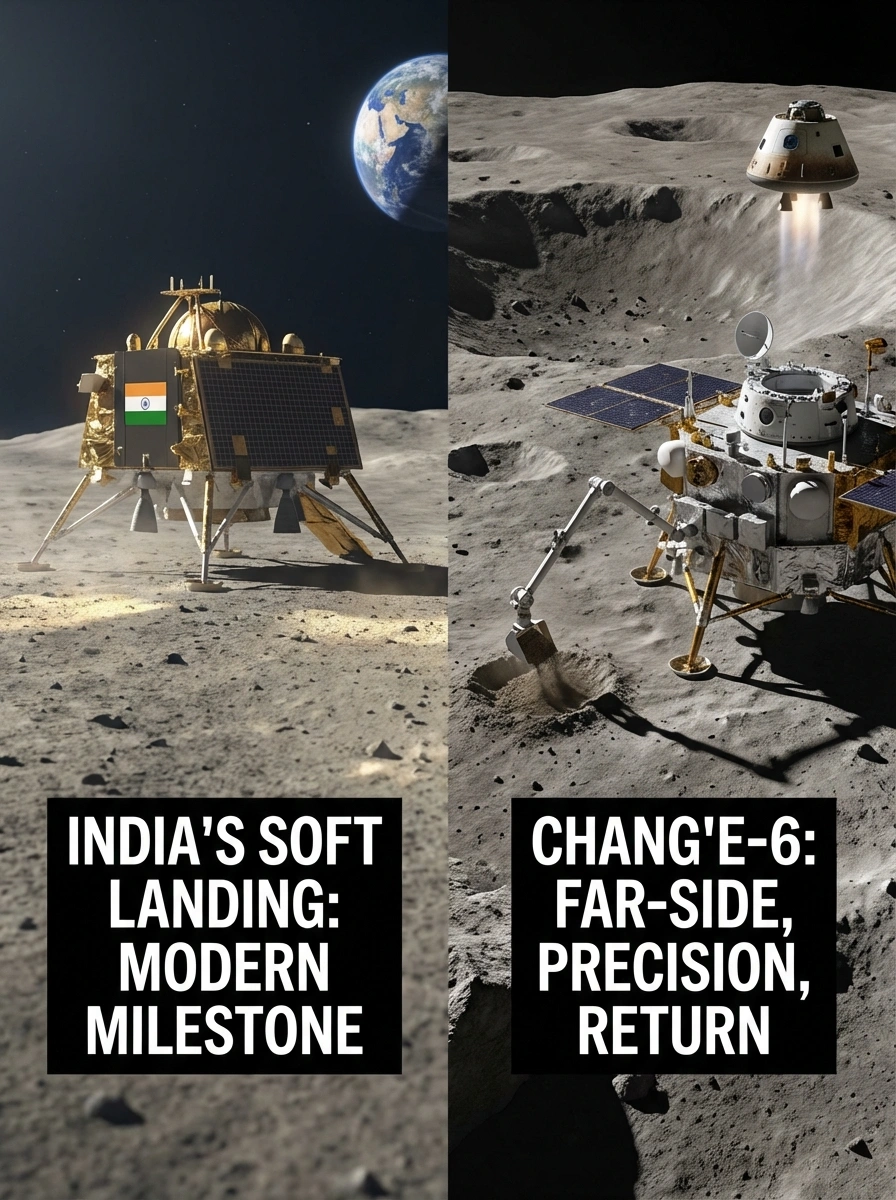
After looking at what Chang’e-6 is actually trying to do, the answer is: yes — because it’s not the same class of challenge. A soft landing is a milestone. A far-side precision landing + sample return is a different kind of mission altogether.
India’s Soft Landing Matters — and It Should Be Respected
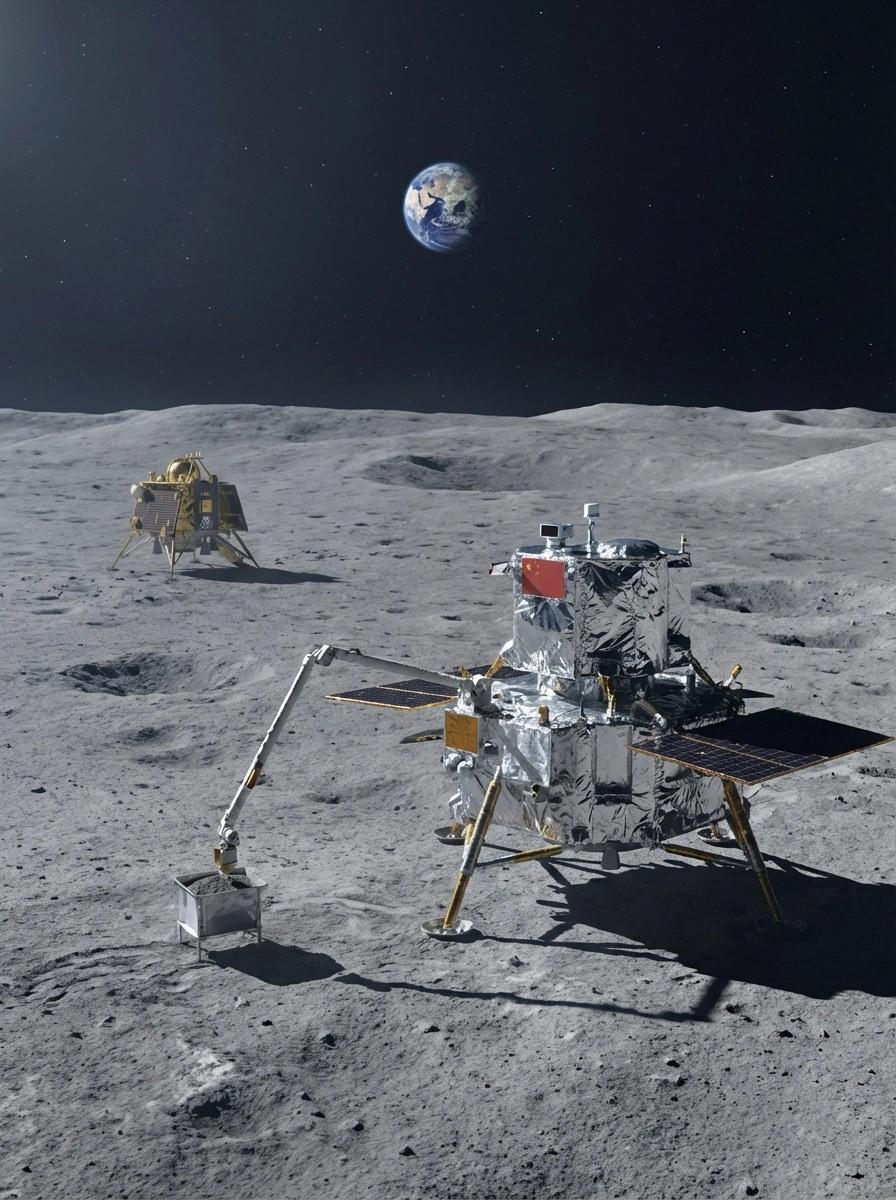
India’s successful soft landing is a real achievement. In the modern era, reliable lunar soft landing remains difficult, and the record shows that missions can fail late in the descent for many reasons: navigation error, terrain hazards, guidance instability, or conservative fuel margins.
The key point: soft landing isn’t “easy” — it’s just a task that becomes more repeatable once a program builds enough experience.
So giving India full credit doesn’t reduce Chang’e-6. It actually sets the stage for why Chang’e-6 is ambitious.
Chang’e-6 Is Not “Soft Landing 1.0” — It’s a Mature Playbook
China’s lunar program has advanced through multiple generations of experience. Chang’e-6 represents a mission profile that combines several “hard parts” at once:
- Early missions proved basic landing.
- Later missions expanded to harder locations.
- Subsequent missions added complex operations like sampling and return.
- Chang'e-6 synthesizes these capabilities for the most challenging environment yet.
That’s why comparing any two “soft landings” as if they are equal is misleading. The term describes the outcome, not the difficulty of the journey.
The Real Difficulty Spike: The Lunar Far Side
1) Terrain: The far side is less forgiving
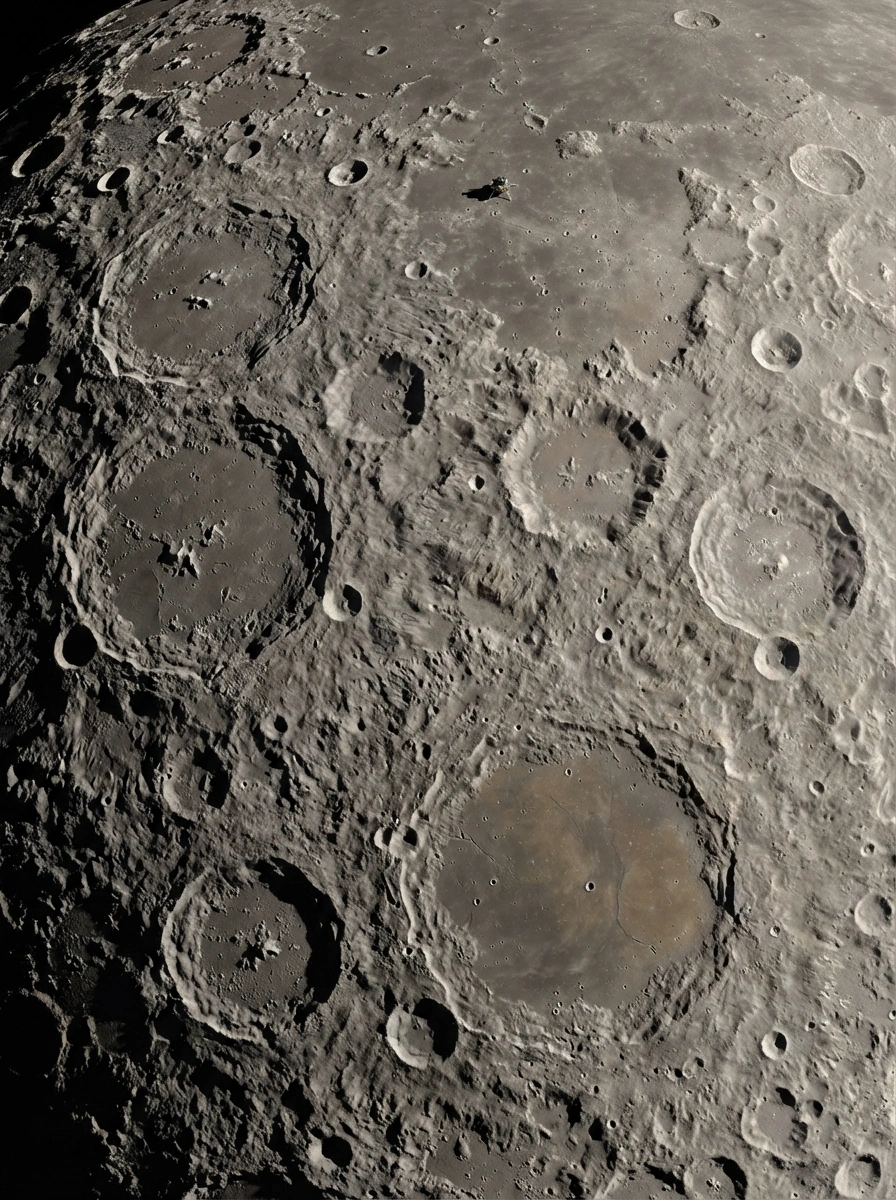
The Moon’s far side is often described as more rugged, with fewer broad, safe plains than many near-side regions. Flat zones do exist, but they are frequently associated with crater basins and complex boundary terrain. Landing safety increases dramatically when you can select a wide, relatively flat zone instead of a narrow target inside complex topography.
2) Descent geometry becomes more constrained
In rougher terrain — especially near crater walls, basin edges, or mountainous boundaries — a more conservative descent can actually increase collision risk. This pushes missions toward:
- Tighter precision requirements
- More demanding hazard-avoidance
- Less tolerance for error
“Landing Zone” vs “Landing Point”: Why Precision Changes Everything
A useful way to frame the difference is:
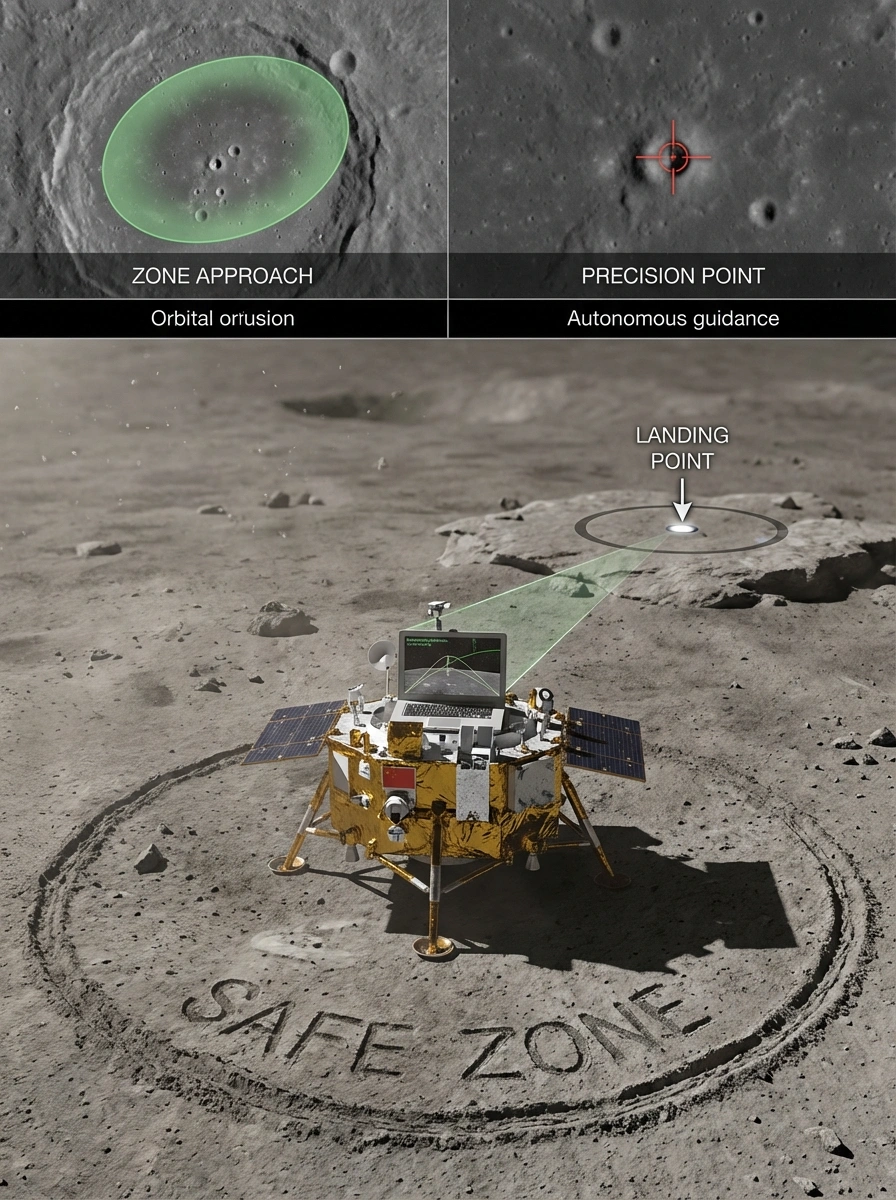
- Landing zone approach: A mission selects a reasonably large safe region. The lander only needs to arrive somewhere inside it.
- Landing point approach: The acceptable ellipse becomes much smaller. You’re not “landing in the area.” You’re landing on the spot.
Chang’e-6 is a precision landing problem. This drives extreme requirements for navigation accuracy, real-time guidance adjustments, and hazard detection.
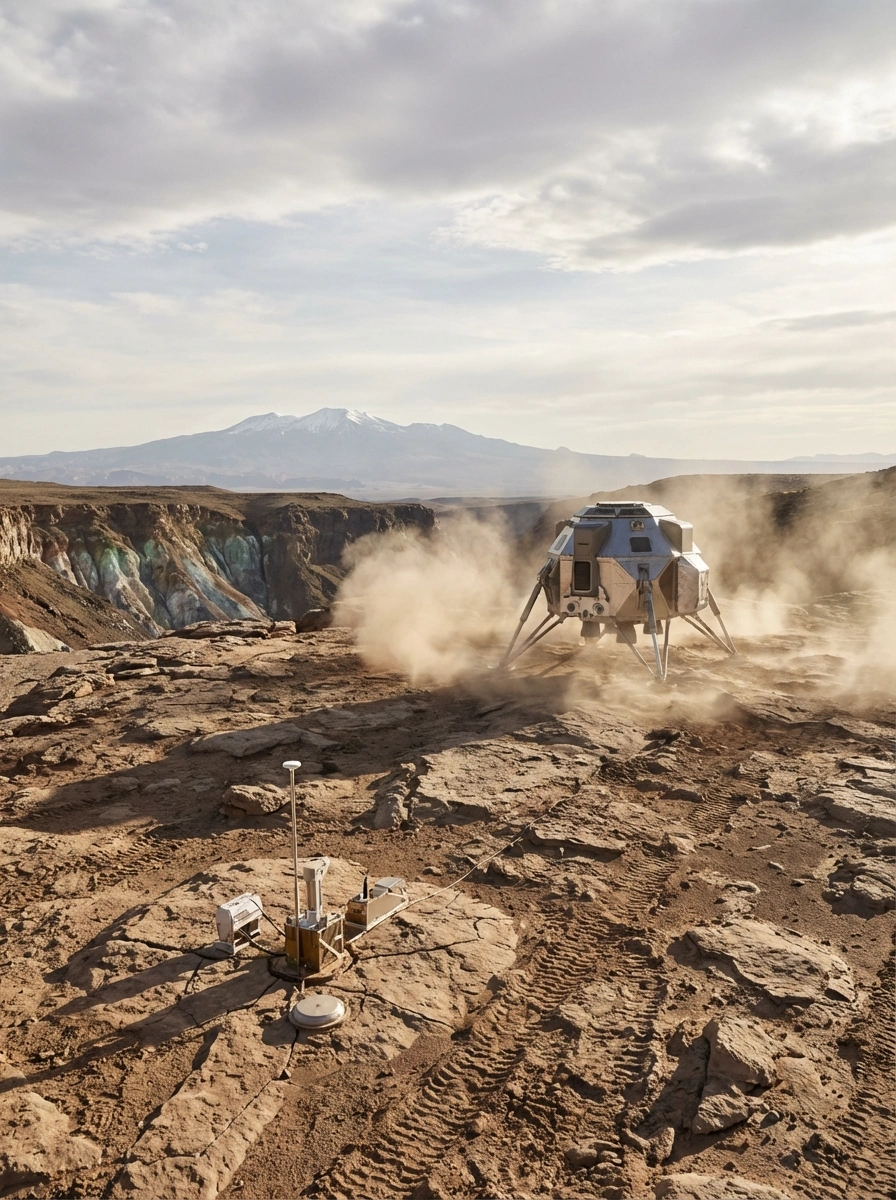
Future Lunar Bases and Polar Exploration
If you can reliably do precision landings in hard terrain, you’re building the technical foundation for future missions where the landing site isn’t chosen for convenience — it’s chosen for resources and long-term utility.
Many future lunar goals (especially around the Moon’s polar regions) involve limited candidate sites and unusual lighting constraints. Chang’e-6-style techniques are about making future operations practical.
Bottom Line
India’s soft landing deserves respect — it’s an important modern milestone. But Chang’e-6 aims at a mission profile that stacks multiple hard problems:
- Far-side landing
- Precision targeting in difficult terrain
- Complex sample operations
- Return to Earth