Published on:
WWDC Podcast Roundtable: Liquid Glass Steals the Show as Apple Intelligence Faces Fresh Questions
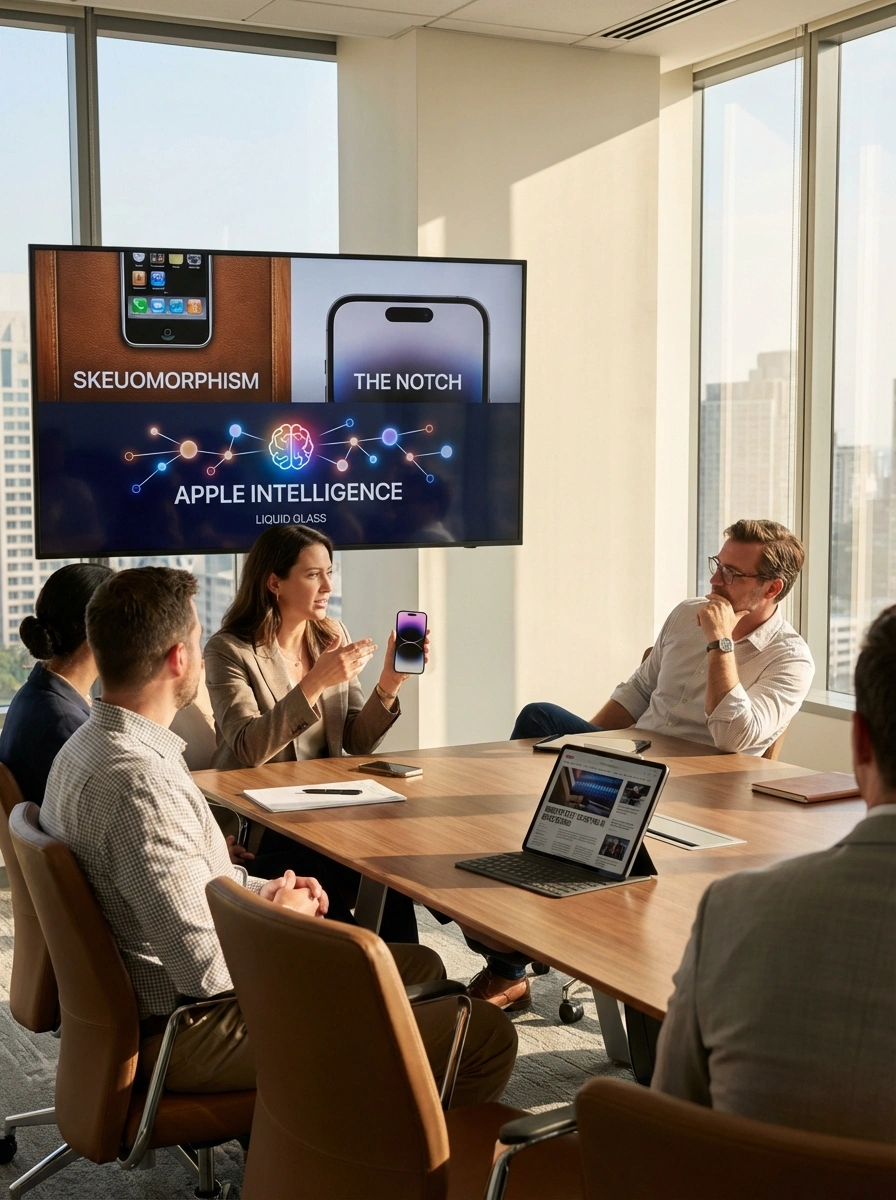
A candid podcast recorded on the ground at WWDC is sparking discussion among developers and Apple watchers, as a panel of commentators weighed Apple’s latest announcements and the moments that felt most surprising—or conspicuously missing.
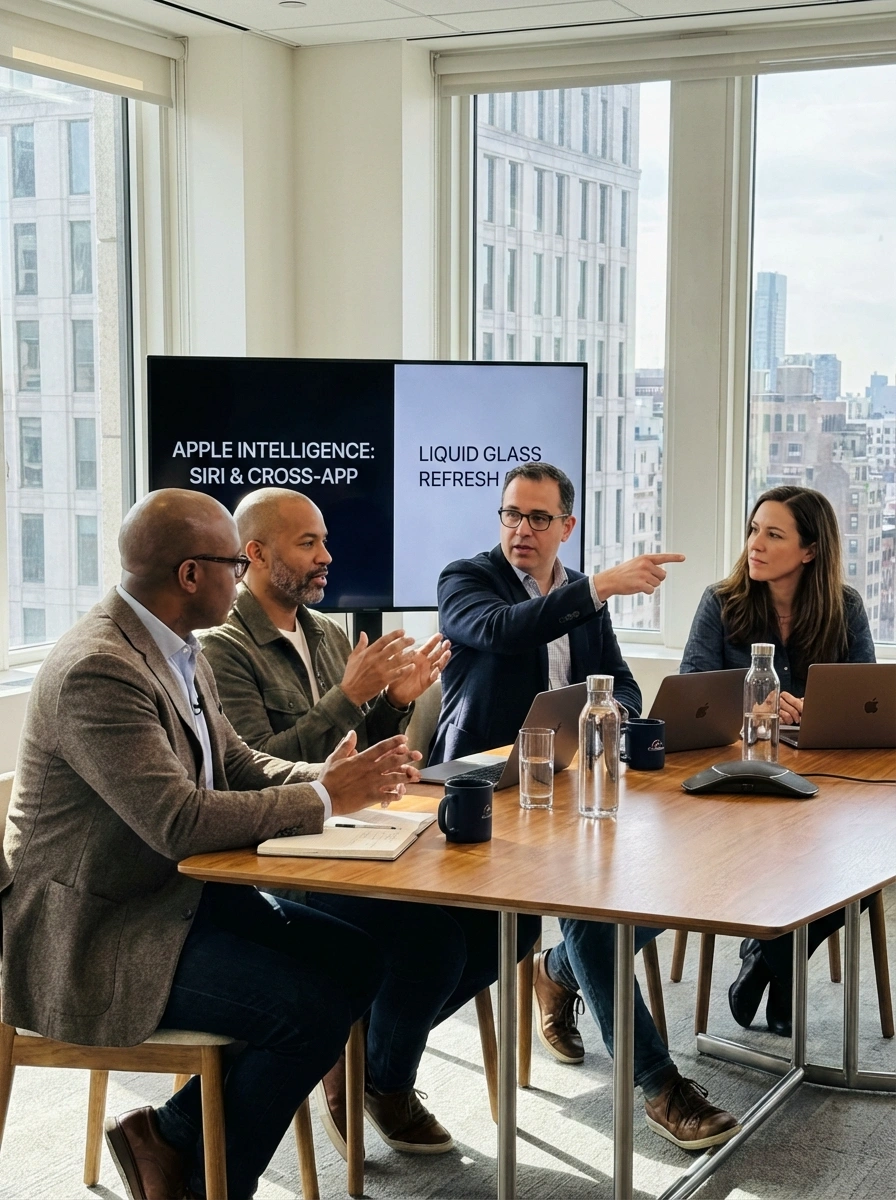
While Apple’s keynote leaned heavily into a sweeping visual refresh headlined by Liquid Glass, several speakers argued the biggest unresolved story wasn’t design at all, but the status of Apple Intelligence—especially the more personalized, cross-app Siri.
The “Wow” Moments: iPadOS Momentum and Vision Pro Realism
The conversation quickly split into two camps: those impressed by the new design language, and those energized by practical shifts on iPadOS. Multi-tasking improvements drew strong reactions, making the iPad feel closer to a full computer than ever before.
On the spatial front, the realism of Vision Pro features like Spatial Scenes and Persona stood out. Panelists described the effect not as “making a photo look 3D,” but closer to reconstructing a scene so it can be viewed from many angles.
Liquid Glass: Designed for Spatial Computing, Now Colliding with Flat Screens
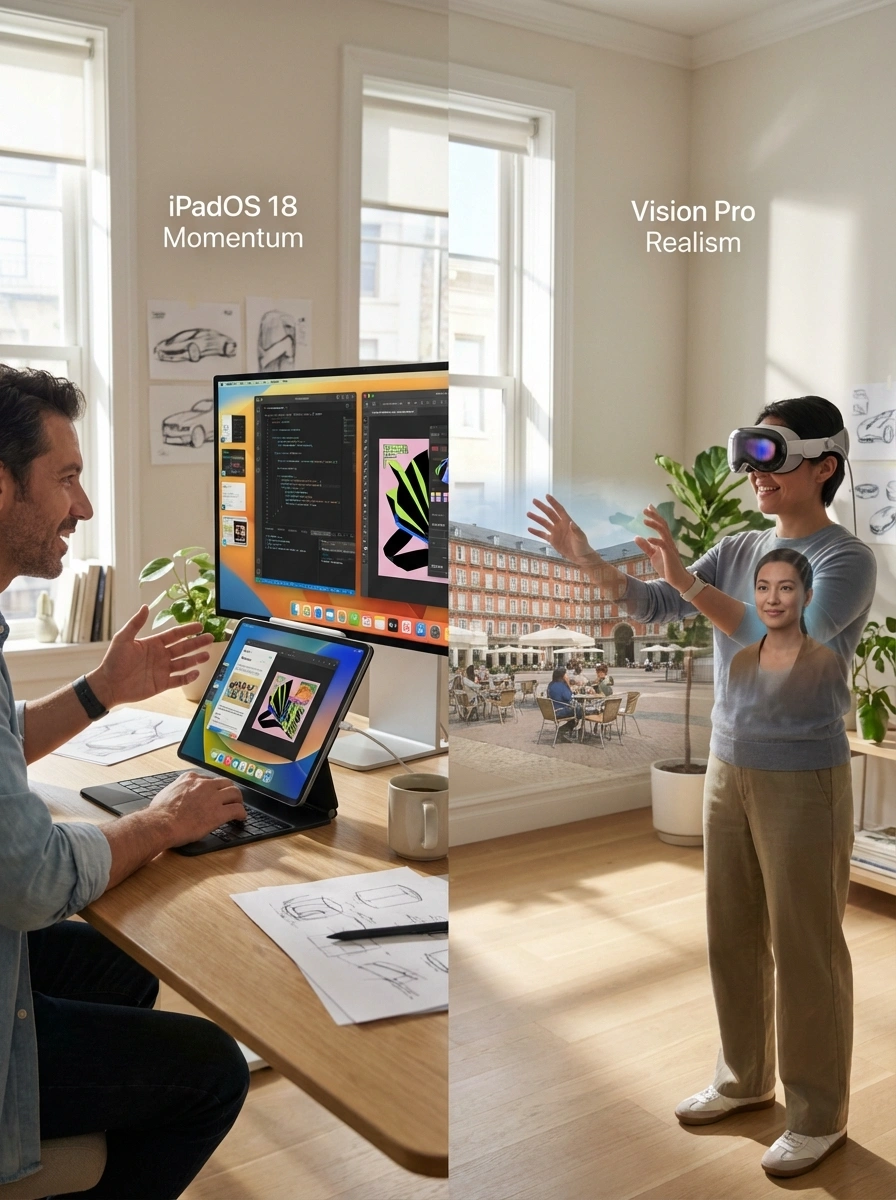
Most of the discussion centered on Liquid Glass. The aesthetic is rooted in Vision Pro’s “awareness” philosophy—interface elements should remain translucent to preserve context. While this works naturally in spatial environments, on flat displays, it can create hierarchy issues.
Several challenges were cited:
- Readability: Transparency can blur toggle statuses or URL text.
- Layering: Early beta builds can look “busy” when multiple translucent layers stack.
- Performance: Questions remain about the impact of lensing and refraction on battery life.
“The logic works in spatial computing, but on a traditional flat display, transparency can create readability issues.”
The Bigger Absence: Apple Intelligence Still Feels Unfinished
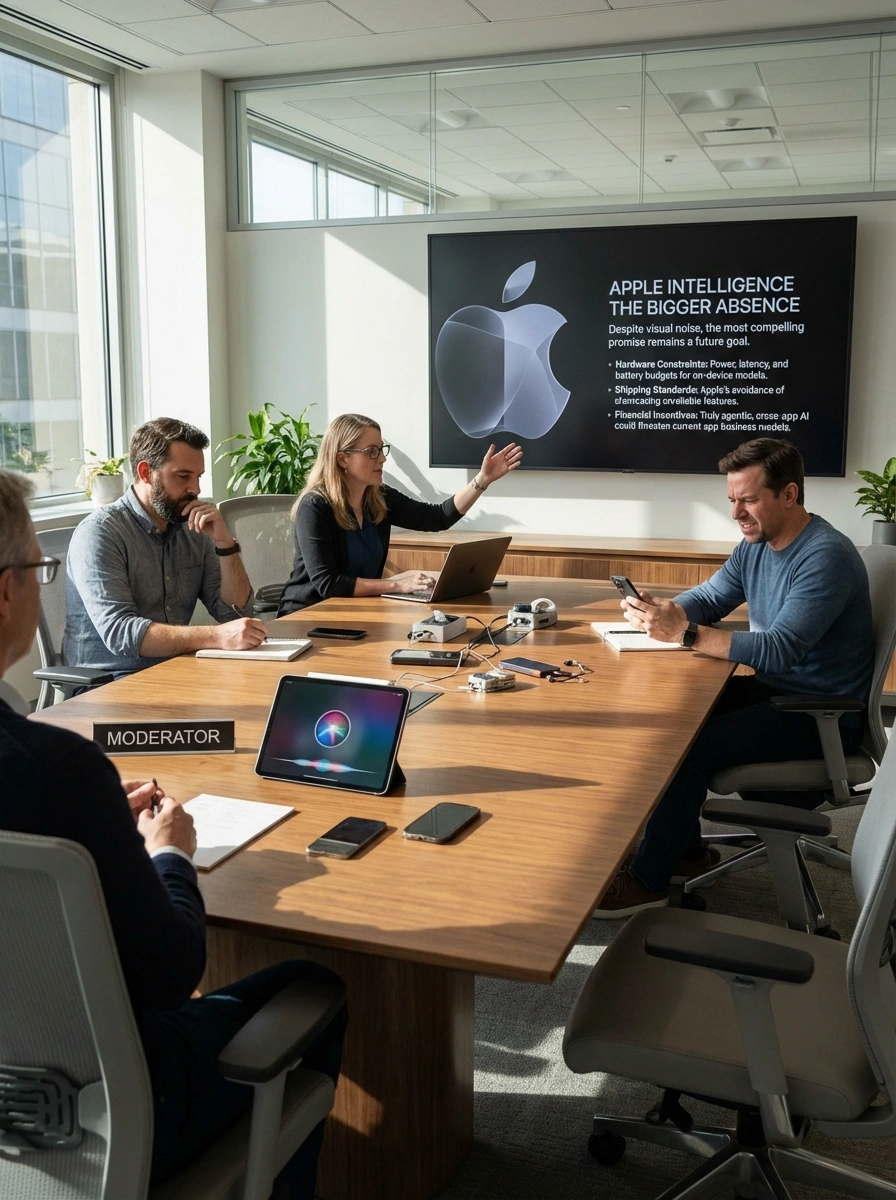
Despite the visual noise, the most consistent frustration was Apple Intelligence. The most compelling promise—a deeply personalized Siri—remains a future goal.
Panelists offered several reasons for the "muted" AI presence:
- Hardware Constraints: Power, latency, and battery budgets for on-device models.
- Shipping Standards: Apple’s avoidance of showcasing unreliable features.
- Financial Incentives: Truly agentic, cross-app AI could threaten current app business models.
A Familiar Pattern: Swing, Then Refine
The discussion ended with a look back at Apple's history of disruptive shifts—from skeuomorphism to the notch. Most participants agreed that while Liquid Glass is the headline today, Apple Intelligence remains the story to watch.
The industry often follows Apple’s visual direction, but satisfying the high expectations set for AI will be the real test of this cycle.