Published on:
Jump to FAQ ↓Google Pixel 10 Pro XL — The Most Detailed “Quick Talk” You’ll Read (Early Review)
Google’s Pixel story has always been chaotic in a very Google way. After years of experimentation, the Pixel 10 Pro XL arrived as a tenth-generation milestone. However, instead of a confident leap, we have a phone that looks almost the same, performs like it’s still catching up, and leans harder than ever on AI and ecosystem monetization to justify its flagship price.
This is an early deep dive based on real usage patterns, comparative testing logic, and very specific observations.
Pricing Reality: Guaranteed Depreciation
Buying a Pixel at launch isn’t just about the price tag—it’s about the near-guaranteed loss. Historically, Pixels drop value rapidly through promotions and seasonal discounts., it feels poorly positioned against the Samsung Galaxy S25 Ultra or Xiaomi 15 Ultra.
Tensor G5: Efficiency Over Power
The move to TSMC N3P for the Tensor G5 is a big headline. It brings a ~16% single-core and ~30% multi-core uplift over the previous generation. While it's a needed correction, it still only reaches about 70% of the multi-core performance found in the Snapdragon 8 Gen 4.
The GPU Problem
Google switched to Imagination (PowerVR) DXT series IP. The results are blunt:
- No hardware ray tracing.
- Benchmarks are roughly half of the Snapdragon 8 Gen 4.
- Driver maturity lags, causing stability issues in games like Genshin Impact.
The theme is consistent: cool temperatures, disappointing frames.
Daily Performance
For 4K60 recording and social feeds, it’s one of the coolest flagships. However, the UI is often gated by long animations, and heavy multitasking can cause the system to hitch or fail to render the wallpaper correctly. Also, while it ships with 16GB RAM, about 3.5GB is reserved exclusively for AI, leaving you with roughly 12GB for apps.
Design: Same Mold, Tiny Tweaks
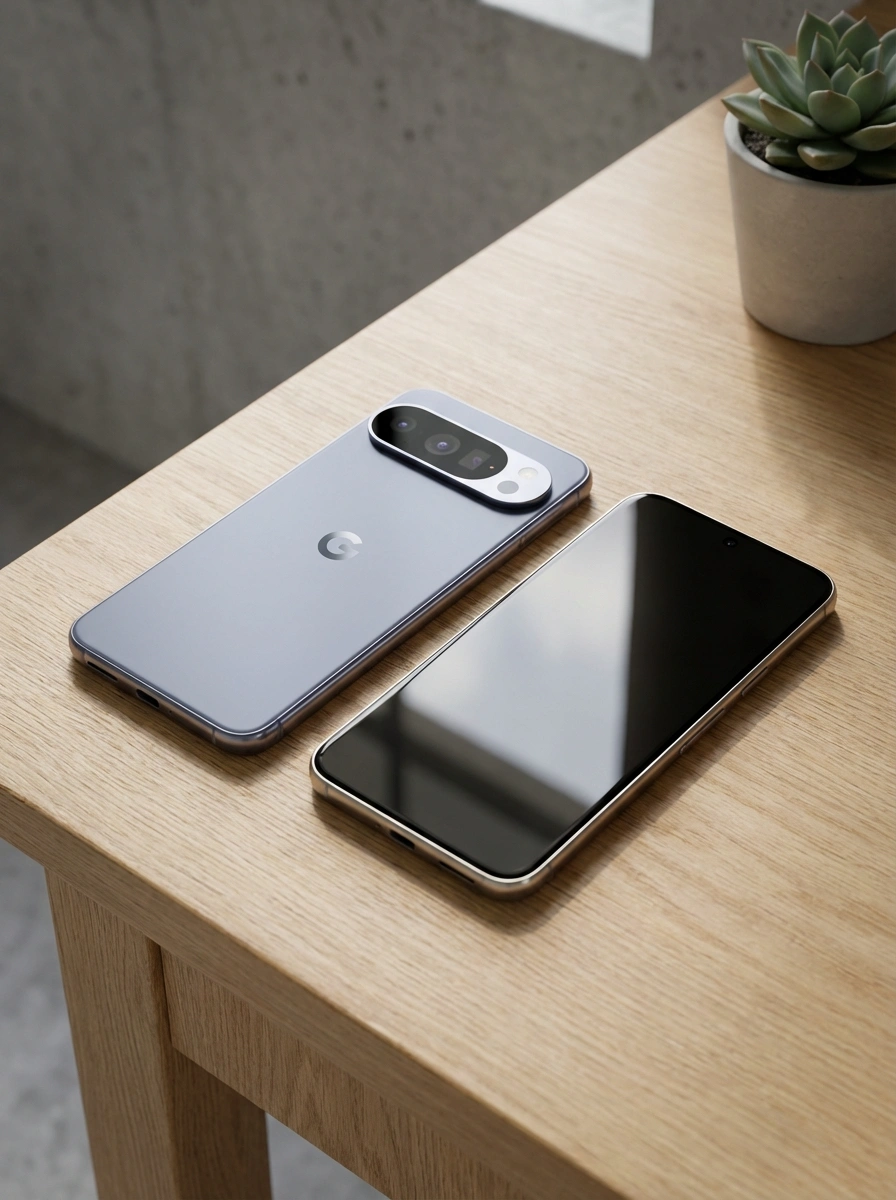
If you hoped for a visual overhaul, you'll be disappointed. The "visor" camera bar remains, and the dimensions are effectively unchanged. Small tweaks to the geometry mean old cases won't fit, pushing you toward the new magnetic ecosystem.
The front design remains a weakness, with a large cutout and bezel proportions that feel dated compared to modern premium rivals.
Display: Brightness vs. Uniformity
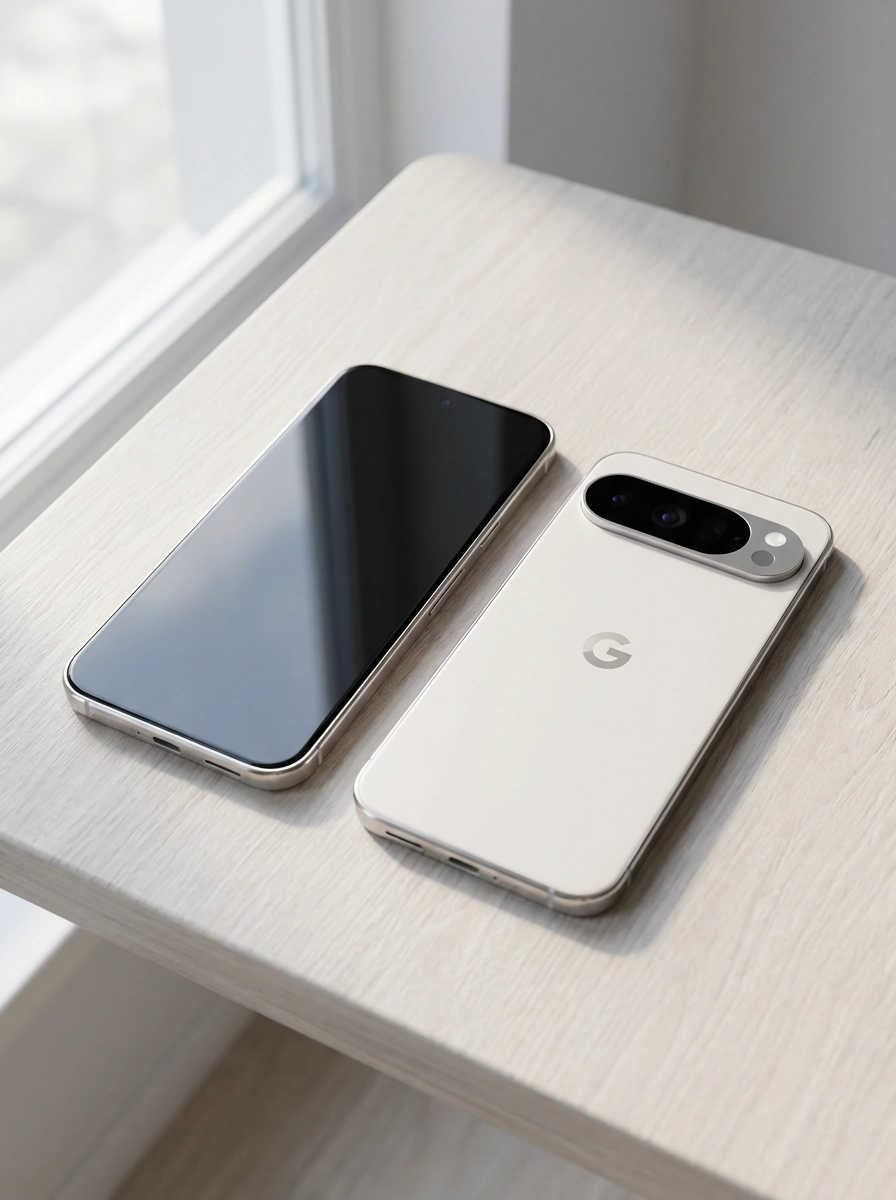
The screen is spectacular in brightness but unremarkable in uniformity.
- Peak brightness: Reaches ~2815 nits (10% window).
- Full-screen white: ~1430 nits.
- Weakness: Brightness variance across zones (uniformity) is only "so-so."
- PWM: Default baseline is a low-frequency 240Hz, though a higher option is buried in accessibility settings.
Battery and Charging: Underwhelming Real-Life
The 5200mAh battery looks good on paper but doesn't deliver class-leading endurance. The "45W" charging is extremely picky about chargers, often falling back to lower-voltage modes. In testing, it took roughly 85 minutes to reach 100%—far behind rivals who fully charge in half that time.
Pixel Snap: The Magnetic Move
Google's new Pixel Snap is a clear play for iPhone users. It brings magnetic accessories and Qi-based wireless charging. However, it comes with trade-offs: reverse wireless charging has been removed due to protocol conflicts, and magnetic wireless power levels vary by model.
Audio, Haptics, and Biometrics
This is where the Pixel 10 Pro XL shines.
- Haptics: Restrained, layered, and perfectly tuned.
- Speakers: Notably improved with strong body and fullness.
- Biometrics: The ultrasonic fingerprint sensor is reliable, and face unlock is unusually capable for a single-camera setup.
Cameras: Hardware Stagnation, Software Bugs
The hardware is effectively the same as the previous generation. While competitive, it doesn't overwhelm.
- Photo: 5x zoom can edge Samsung but trails high-res periscope systems like Xiaomi’s. Night mode is slow and sometimes over-sharpened.
- Video: Overheats first in harsh conditions. Instead of stopping, it reduces quality and stabilization, leading to "degraded" footage. Functional bugs in lens switching and focus remain prevalent.
[!IMPORTANT] Some high-end video modes still require cloud processing (upload, wait, download), whereas competitors perform these enhancements locally and instantly.
AI and Android 16
Google’s AI is best when proactive—suggesting actions or surfacing info. AIGC editing and the new Pixel Studio are standout features. However, many advanced assistant features are still limited by region and language.
Android 16 offers fast updates and 7 years of support, but the early build is rough, with layout quirks, gesture failures, and intermittent UI lockups.
Final Verdict: Don’t Buy at Launch
The Pixel 10 Pro XL feels like a phone of small refinements and heavy AI marketing that fails to deliver on flagship fundamentals.
- Best performance: Choose Apple or Samsung.
- Best camera hardware: Look toward top Chinese flagships.
- Best Pixel value: Buy a discounted Pixel 9 Pro XL.
Wait for heavy discounts or skip it; as a tenth-anniversary phone, it lacks the momentum to justify its launch price.