Sony phones haven’t been officially sold in many markets for a while, and seeing the brand's presence fade hits oddly hard for longtime fans. The Xperia 10 Mark VII arrives as a fascinating contradiction—stunningly beautiful on the outside, but almost frustratingly outdated on the inside. It makes you ask one brutal question: “Why does this exist at this price?”
This review looks at why the Xperia 10 Mark VII is the "white moonlight" of smartphones—beautiful to look at, but mostly a Sony phone that forgot to compete.
Design: Sony’s Pure White Magic
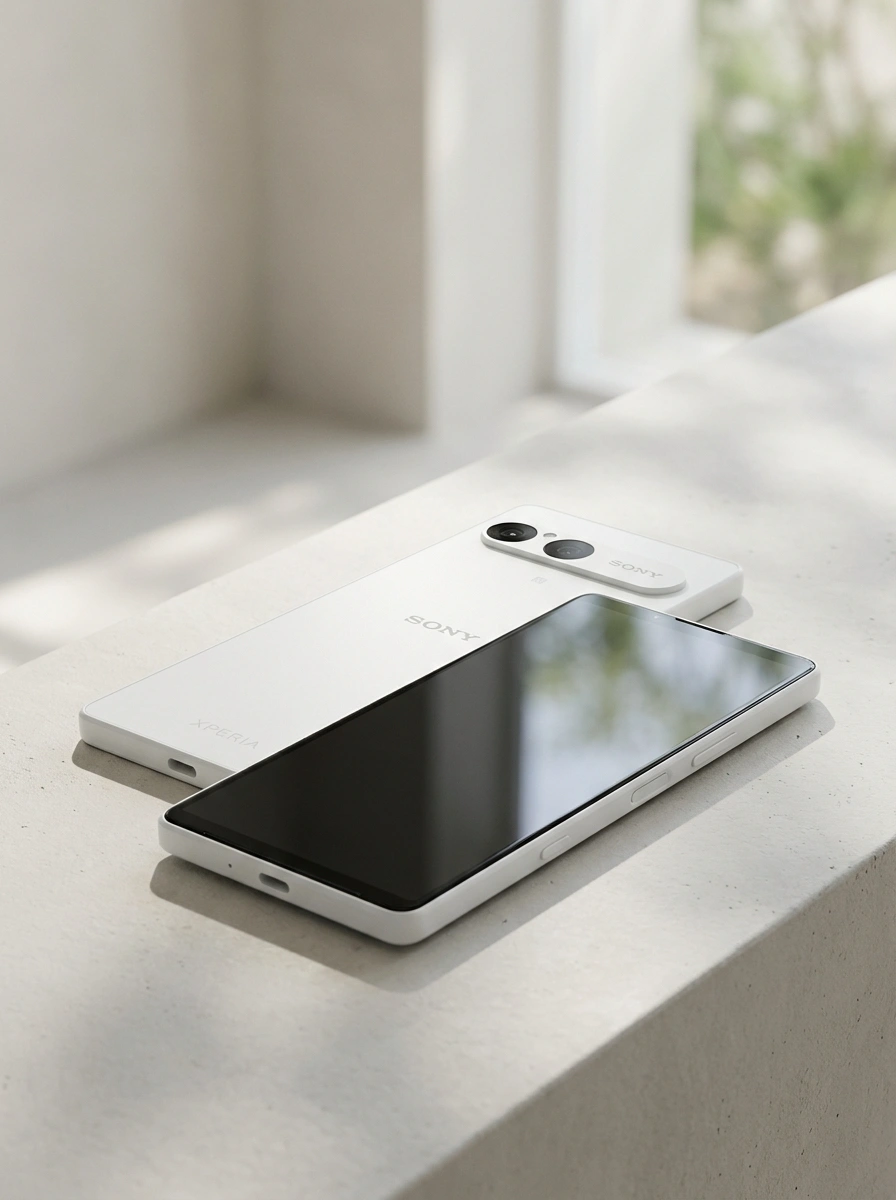
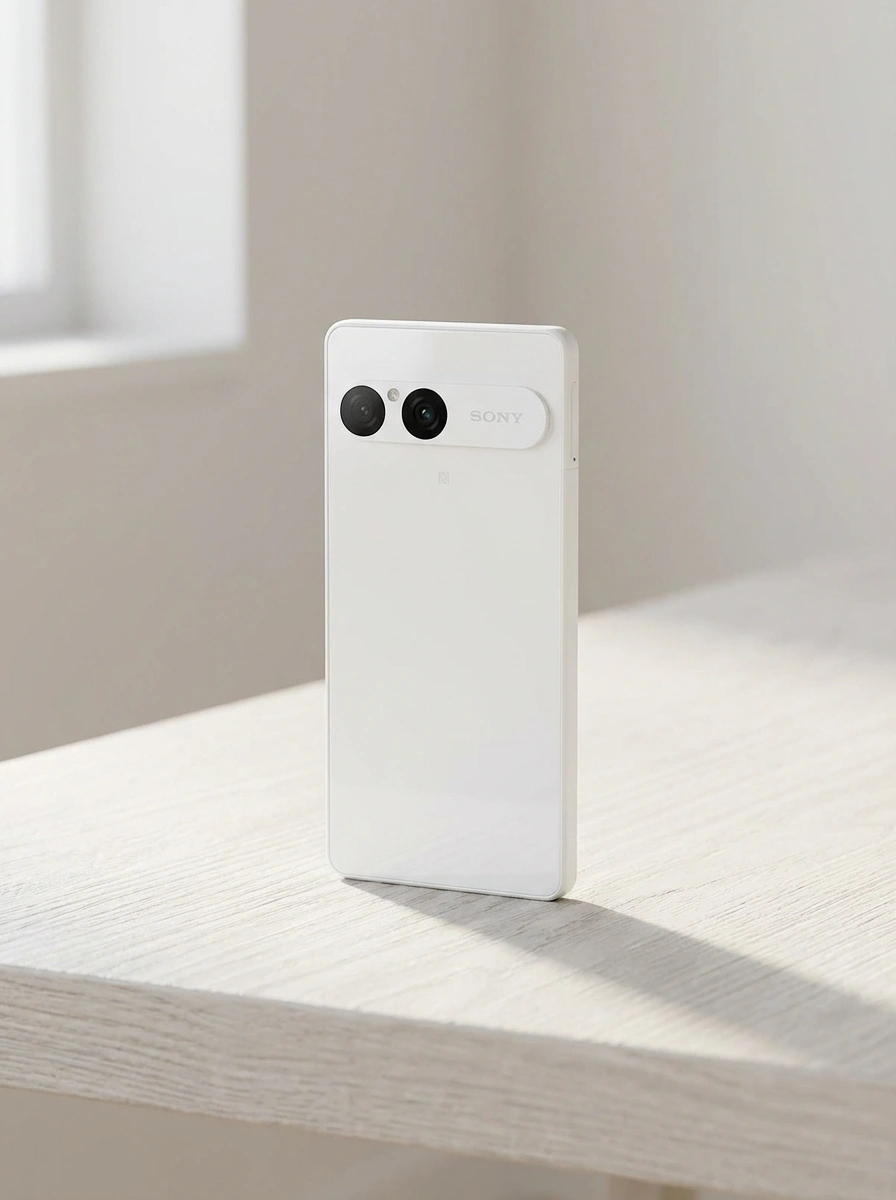
The Xperia 10 Mark VII embraces Sony’s signature minimalism. Its "pure white" finish is clean and confident, avoiding the gradients or gray tints common in other brands. While the frame and back are plastic, the high-quality matte paint feels soft and skin-friendly, making ordinary materials feel premium.
The camera module has shifted to a horizontal bar layout, a nod toward current industry trends while maintaining a distinct Sony vibe. Branding is iconic, with a bold Sony logo and a corner Xperia logo that calls back to the classic Z-series.
Note for users: Since the back is plastic, using it without a case on a white device risks staining that pristine finish over time.
Display: 120Hz at Last, But With Caveats
Sony has shifted from the 21:9 ratio to a more mainstream 19.5:9, which better fits modern streaming apps. More importantly, 120Hz refresh rate has finally arrived.
However, the 6.1-inch 1080p panel feels "just enough" rather than impressive. Manual brightness stays around 700 nits, and uniformity is mediocre. Bafflingly, there is no Always-On Display (AOD)—not even basic "glance" info. Sony also keeps the "complete screen" concept without punch-holes or notches, resulting in symmetrical but significantly large bezels and borders.
Hardware: A Chip from the Past
Under the hood lies the Snapdragon 6 Gen 3, a chipset that feels out of place in 2025.
- Geekbench 6: ~1000 single-core / ~3000 multi-core.
- Gaming: Light titles run fine, but heavy games struggle around 35fps with noticeable heat.
The verdict is harsh: it doesn't consume much power because it simply can't do much. System-level smoothness suffers, with slow app launches and lag during multitasking or repeated camera use.
Battery & charging: Disappointing Endurance
Despite the 5000mAh capacity, real-world endurance is borderline disastrous, suggesting poor optimization between the chip and software. Charging is equally slow by modern standards, with 18W wired charging taking roughly 93 minutes to reach full capacity.
Sony Heritage: Stubborn Virtues
Where Sony still wins is in its commitment to practical, legacy features:
- Front-facing stereo speakers: Clear speech, though limited bass.
- 3.5mm headphone jack: Rare and highly valued by audiophiles.
- microSD expansion: Tool-free SIM tray for easy storage upgrades.
- Durability: IPX5/IPX8 water resistance remains a strong spec for this tier.
Software: Minimal to a Fault
The software is close to stock Android—purer than most Pixels. However, it lacks identity and polish. The UI feels dated, and multitasking stress tests show poor background retention. AI features are limited to what Google's Gemini provides rather than any Sony-developed internal experiences.
Camera: Dual-Lens Limitations
Historically, Sony justified compromises with camera performance. That logic doesn't hold here. The dual-camera system lacks a dedicated telephoto lens, and the app is slow to respond.
- Style: Sony’s "low saturation, cooler" processing persists, providing a realistic look that can feel dull next to punchy computational results from rivals.
- Quality: Noise suppression is weak, and night photos are often grainy with noticeable artifacts.
- Video: Limited to 4K 30fps because the chipset doesn't support higher frame rates. Stabilization is one of the few areas where it still performs respectably.
Final Verdict: Beautiful Shell, Outdated Core
The Xperia 10 Mark VII is a contradiction—visually charming and unmistakably Sony, yet stubbornly underpowered. It’s for a very narrow group: longtime fans who value the brand language, the headphone jack, the microSD slot, and the lack of a punch-hole screen.
At its asking price, you are paying a "Sony loyalty tax" for special aesthetics rather than a modern smartphone experience. It feels like proof that Sony’s mobile division is no longer trying to win—only to remain recognizable until the very end.