Published on:
Jump to FAQ ↓Xiaomi Sound Review: Xiaomi’s First Serious Step into Premium Smart Speakers
With the Xiaomi Sound, Xiaomi officially enters the high-end smart speaker segment for the first time. While Xiaomi has released many smart speakers over the years, most focused on affordability and smart features rather than design or audio fidelity. Xiaomi Sound is different—it clearly aims higher, both visually and acoustically.
This review looks at how well Xiaomi Sound delivers on that ambition in real-world use.

Design: Transparent, Bold, and Unmistakably Premium
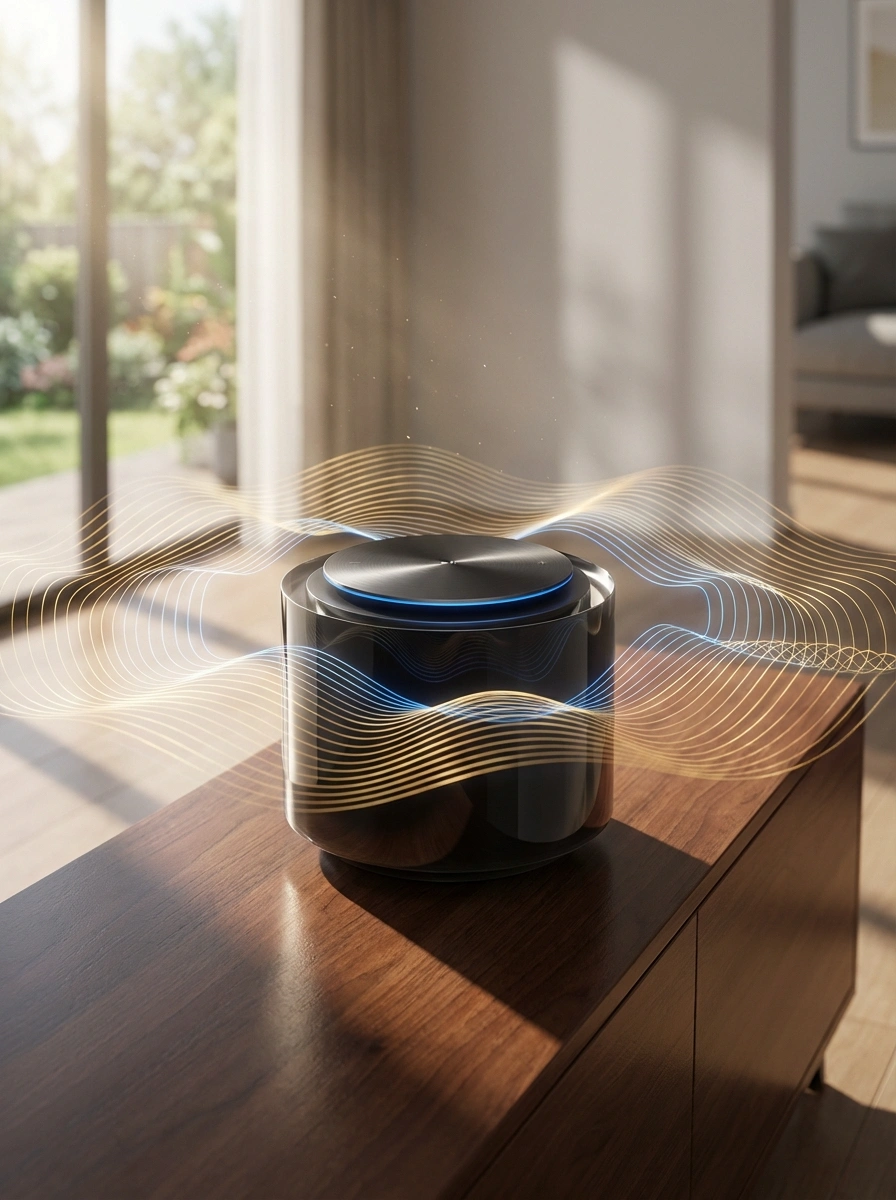
The most striking feature of Xiaomi Sound is its industrial design. The transparent PC enclosure immediately sets it apart from conventional fabric-wrapped speakers. It looks more like a piece of modern audio art than a standard gadget.
The top features a floating aluminum cap, which visually lifts the speaker and subtly evokes luxury car audio systems. This structure also functions as a sound-guiding cone, reducing surface interference when the speaker is placed on different materials.
Touch controls are kept minimal:
- Play / Pause
- Volume up / down
- Double-tap to mute microphones
A 16-million-color circular ambient light ring surrounds the top, activating during interactions. Six microphones are hidden in the base, ensuring accurate voice pickup across the room.
Hardware and Acoustic Design
Inside, Xiaomi Sound uses a 2.25-inch full-range driver (12W) supported by two passive radiators (equivalent to 1.75 inches). For its size, this configuration delivers stronger loudness and fuller bass response than typical compact smart speakers. Combined with 360-degree omnidirectional sound, distribution remains consistent regardless of placement.
Computational Audio and Tuning
Beyond raw hardware, Xiaomi emphasizes computational audio. Using an NPU alongside dual DSP chips, the speaker performs 330 dynamic sound calculations per second, adjusting output in real time based on the music.
Xiaomi developed its own “Nightingale” algorithm, which optimizes each volume level so that low and medium volumes retain midrange presence and controlled bass. Furthermore, Xiaomi partnered with Harman for sound tuning and obtained Hi-Res Audio certification, reinforcing its audio-focused positioning.
Sound Quality Impressions
In everyday listening:
- Bass: Not exaggerated but reaches surprisingly deep for the size.
- Midrange: Intimate and forward, making vocals sound close and natural.
- Treble: Good air and clarity, with clean instrument separation.
Overall, Xiaomi Sound favors balance and clarity over aggressive low-end tuning, making it suitable for long listening sessions across various genres.
Stereo, Multi-Room, and Connectivity
Xiaomi Sound supports stereo pairing with a second unit and multi-room playback for up to eight speakers. Connectivity highlights include:
- UWB Handoff: Seamlessly transfer music from your phone to the speaker just by pointing at it.
- Bluetooth 5.2: Reliable wireless connection.
- Xiaomi “Miaobo”: A wireless streaming solution similar to AirPlay but open for Android users.
Smart Features and Ecosystem Integration
Relying on Xiao Ai, the speaker supports continuous voice commands without needing a wake-word for every step. Within the Mi Home (Mijia) ecosystem, it integrates smoothly with smart appliances like lighting and climate control. A useful household voice broadcasting feature allows messages to be sent between speakers in different rooms.
Verdict: A Confident First Step into Premium Audio
Xiaomi Sound is a clear departure from Xiaomi’s earlier “good enough” smart speakers. It combines a distinctive design, serious attention to audio quality, and advanced computational tuning.
Compared with established competitors like the HomePod mini, Xiaomi Sound holds its ground and even pulls ahead in openness and latency. It is a statement on where Xiaomi's high-end smart home ecosystem is heading—a premium option that feels purpose-built rather than experimental.